top of page

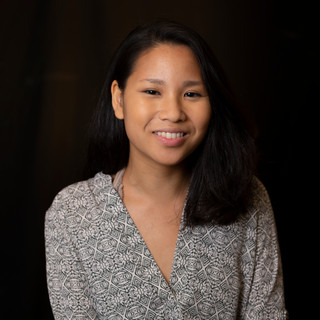
LISA DREHER

Journalist

Education reporter for the Laredo Morning Times in the Texas border city of Laredo. Graduated from the University of Texas at Austin in the fall of 2018 with a journalism degree and history minor. Interned at hyperlocal news site, the Austin Monitor, and Austin’s main legacy paper, the Austin American-Statesman. I was a senior news reporter for The Daily Texan, UT’s official college newspaper, for which I have covered state and local politics. Print journalist skillfull in multimedia tools, such as video and audio storytelling using Adobe Suite

Learn More
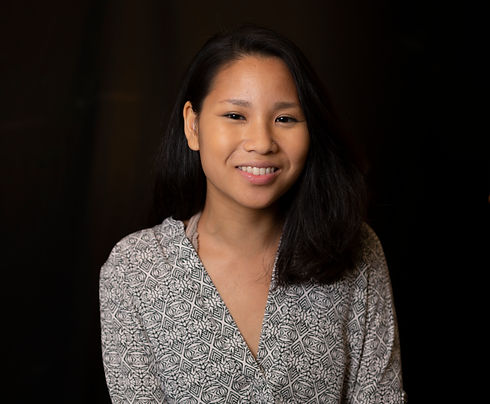
Headshot.jpg

Documentaries

Documentaries

Documentaries
All Categories
Film & Animation
People & Blogs
Cisco's

Cisco's

01:06
J&Js

J&Js

00:57
Ideal Barbershop

Ideal Barbershop

01:54
Sam's Bar B Cue - Final Cut

Sam's Bar B Cue - Final Cut

01:26

'Afraid to be vulnerable’: A male student opens up about being a sexual assault survivor

Screen Shot 2018-12-10 at 7.53.15 PM.png

Listen to the podcast here

Editor’s note: The name of the source has been changed to protect their privacy.

James wasn’t sure what to think walking back to his apartment after a one-night stand with a man he met on a dating app his freshman year at UT. All he knew was he felt more vulnerable than ever before.

“At first I didn’t classify it as rape because it didn’t feel like rape, but then it was like, ‘What does rape feel like?’” James said. “But if a friend told me that experience, I would probably just say ‘rape,’ but I wouldn’t talk about it. I was afraid to be vulnerable around men for a long time after that.”

As a man, James said he struggles sharing his story because of the stigma that male sexual assault survivors are weak or were not assaulted to begin with.

“It affected who I was fundamentally as a man, because being violated is not necessarily the description of what you would consider a man to (be),” he said.

Thirty-nine complaints alleging sexual assault were filed by men to UT’s Title IX Office for the 2017–2018 academic school year, according to information obtained by The Daily Texan through a Texas Public Information Act request. During the same year, 171 complaints alleging sexual assault were filed by women. 

James said he did not report his incident to police for fear of a long and painful legal process. 


Research shows these gaps are consistent with the typical ratio of reports by men and by women, Title IX Office Coordinator Krista Anderson said.

“If someone who is male-identifying has been victimized, the likelihood they’ll likely come forward is greatly reduced because of social norms, cultural norms of men and masculinity,” Anderson said.

Organizations and services such as UT’s Counseling and Mental Health Center, the Rape, Abuse & Incest National Network and the organization 1in6 — which specifically helps male and male-identifying survivors — offer multiple resources such as support groups and hotlines for survivors on campus.

Seth Stewart is the development and communications director for 1in6, named after the statistic that 1 in 6 men will be sexually assaulted or abused.


Men often do not come forward because of social norms about masculinity, Stewart said.

“They’ll call it hazing, they’ll call it humiliation,” Stewart said. “Part of that is sort of putting it in a certain box to preserve a certain kind of strength or confidence or masculinity.”

James said he blamed himself for the incident and worked out more to try to fight the idea that he was too weak to fight off the perpetrator. He now does not feel comfortable being alone with men.

“Before it happened to me, I never thought how large a guy could be, how he could overpower me,” James said. “That’s probably a thing that many women think about a lot, but for me, that never was. I started working out a lot after I was assaulted. I think about the fact that I was probably scrawny then … like it was my own fault for not being stronger.”

James said he did not disclose the incident to many friends, and he anticipates mostly negative reactions after sharing because society frames sexual abuse and harassment of men as humorous or not at all something to be taken seriously. 

“For me, I’m bisexual, and I would never talk about this with a girl I was interested in because of masculinity,” James said.

The fact that men are less likely to report being sexually assaulted, as well as typically being the perpetrators of sexual violence on women, both contribute to the discrepancy between reports by men and women, Anderson said.

“I think because we see a higher rates of victimization of women, that in itself is going to be a disproportionate number of complaints from women,” Anderson said. “When we do see men have been victimized in some way, shape or form, they feel less comfortable coming forward. And not that everything is men-on-women (or) women-on-men, we see same-sex violence as well.”

About 15 percent of female UT students and 5 percent of male students reported being raped at UT, according to the 2017 Cultivating Learning and Safe Environments survey.

Men are often are left out of the dialogue about sexual assault, which should include discussion about more men without taking away from women’s experiences, Stewart said.

“There can be — and not all the time of course — sometimes the automatic assumption that men are bystanders watching this happen to women or they’re perpetrators,” Stewart said. “So, thinking about a man as a survivor is not the first place that some people’s minds go to.”

Using alcohol and drugs to cope with sexual assault often occurs during college, Stewart said. James said he drank and used drugs to deal with his trauma.

James said he is currently doing better after time has passed, but he knows the psychological effects will follow him. He hopes more people have empathy, not only when survivors disclose but when they are coping with the trauma in their daily lives following the assault.

“People have a tendency to treat male victims of sexual assault like ‘it’s your fault for not being man enough. It shouldn’t really have affected you that much. Why is this a big deal?’” James said. “Especially if you’re a straight guy, it’s like, ‘You got sex, why are you treating this like it’s a bad thing?’”

Search

UHS to train medical staffers on health care for transgender students in next academic year

  • Writer: Lisa Dreher
    Lisa Dreher
  • Apr 14, 2017
  • 2 min read

During an appointment with UT’s Counseling and Mental Health Center, Thatcher Combs said the counselor repeatedly expressed his surprise that Combs was transgender instead of addressing the mental health problem with which he needed help.


ree
Photo credit: Juan Figueroa

“The person that spoke with me, the entire time, did not actually focus on what I came to speak about,” said Combs, a sociology graduate student. “But continued to refer back to, ‘Oh, you’re trans? I wouldn’t know you’re trans.’ The obsession with … how I looked was really disturbing.”


Combs said he refuses to go back to CMHC as well as University Health Services for its medical services because of the experience, and said many other transgender people have experienced harassment or been denied service because of their identity.


UHS plans to launch training programs for medical staffers and services specifically for transgender students in the next academic year, UHS Medical Director Vander Straten said. Straten said UT is finally joining many other colleges in educating staffers about new technology and the appropriate terminology to use so transgender students are comfortable and healthy.


“Some institutions are much more further along than we are here at UT, and we certainly recognize that and want to be able to provide this type of service as part of our core line of services,” Straten said.


Straten said hearing stories from UT’s Gender and Sexuality Center of students intimidated by health providers inspired him to provide better accomodations for transgender students.

“We’ve heard individual stories by students … that have been very moving to me personally in terms of transgender students feeling microagressions or feeling discriminated against or potentially physically threatened when they’ve tried to seek services off-campus,” Straten said.


Staffers will attend conferences with experts to learn about treatments such as gender affirming medication therapy, which provides people the right hormones to maintain their gender.


Sara Oswalt, the chair of the American College Health Association’s LGBTQ+ Health Coalition, researches sexual health and said providers must know how to consult patients on the changes happening to their body.


“If you’re a person who is wanting to seek out male hormones, which is going to be testosterone, you’re going to have an increase in facial hair or body hair,” Oswalt said. “Sometimes those physical changes can be uncomfortable or difficult. That’s where the conversation with the provider … will help them guide what levels need to be adjusted or not.”


Above all, Straten said doctors must know the right terminology and openly approach any situation to make the patient comfortable and cared for.


“If we misgender the student or misidentify the student … all that good medical work and that knowledge basically goes out the window,” Straten said. “Because then we’ve potentially come across to the student as being disinterested or disgenuine or ill-informed.”


Recent Posts

See All

Comments


817 888 0491

©2018 by Lisa Dreher. Proudly created with Wix.com

bottom of page